
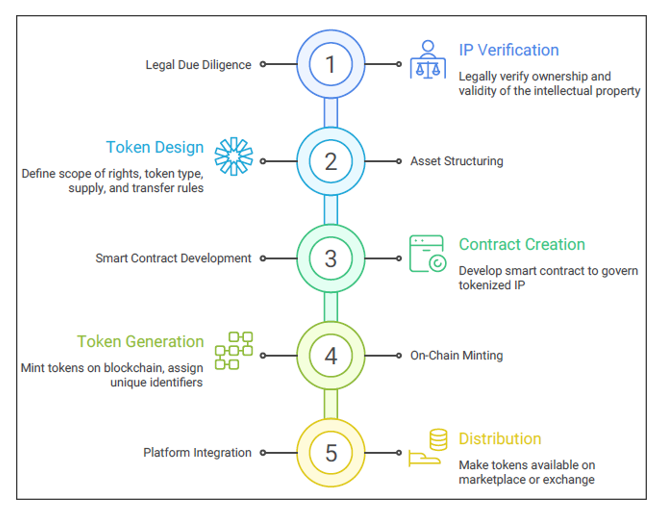
Defining fractional intellectual property
The term fractional intellectual property often creates confusion because it is used to describe two distinct concepts in the legal and investment sectors. One refers to a staffing model for legal services, while the other refers to the actual division of ownership rights in an asset. For the purposes of this article, we focus on the latter: the emerging trend of dividing rights to a single intellectual property asset among multiple parties.
Fractional IP ownership involves splitting an asset—such as a patent, copyright, or trademark—into shares. This model allows investors to purchase only the portion of rights they require, rather than acquiring the entire asset. This approach is increasingly applied to music rights, digital content, and patented technologies, opening access to assets that were previously too expensive for individual investors.
This structure is not a new legal invention but an adaptation of existing property and securities laws to intangible assets. As noted in early patent discussions on fractional ownership systems, the goal is to allow participants to maximize investment value by purchasing only the shares they need [src-5]. This creates a more liquid market for intellectual property, similar to how fractional ownership works in real estate.
While the legal frameworks for these transactions vary by jurisdiction, the core mechanism remains the same: multiple parties hold defined percentages of rights and revenues from a single IP asset. This model is gaining traction as digital assets become more standardized and easier to tokenize, though it remains a niche area within broader intellectual property law.
"Fractional ownership is opening access to intellectual property assets like music rights, patents, and digital content." — Clockwork App
As this space evolves, legal professionals and investors are closely watching how courts and regulatory bodies define the boundaries of these shared ownership structures. The focus remains on ensuring that rights are clearly defined, revenues are accurately split, and all parties understand their legal obligations under the chosen jurisdiction.
AI copyright implications for shared rights
The emergence of generative artificial intelligence introduces a new layer of complexity to fractional intellectual property. When rights to a creative work are already split among multiple stakeholders, the involvement of AI in the creation or modification process can blur the lines of ownership and licensing. This ambiguity creates significant legal friction, particularly when determining who holds the rights to AI-assisted outputs.
Current legal frameworks, such as those from the U.S. Copyright Office, generally hold that works generated entirely by AI without human authorship are not copyrightable. However, fractional IP models often involve human creators who use AI tools as part of their workflow. In these cases, the resulting work may contain a mix of human and AI-generated elements, complicating the determination of which rights holders are entitled to compensation or control.
This situation is particularly challenging for fractional IP platforms that manage music rights, patents, or digital content. If an AI tool is used to remix or derive new content from a fractionalized asset, it is unclear whether the new output falls under the existing licensing agreements or requires new negotiations. Without clear definitions, rights holders may face unexpected dilution of their value or unauthorized use of their assets.
To mitigate these risks, fractional IP agreements must explicitly address AI usage. Licensing contracts should specify whether AI-generated derivatives are permitted, how revenue from such works is distributed, and who bears the liability for copyright infringement. Clear, upfront definitions are essential to protect the interests of all parties involved in fractional ownership structures.
Structuring digital asset licensing deals
Use this section to make the Fractional Intellectual Property decision easier to compare in real life, not just on paper. Start with the reader's actual constraint, then separate must-have requirements from details that are merely nice to have. A practical choice should survive normal use, maintenance, timing, and budget. If a recommendation only works in an ideal situation, call that out plainly and give the reader a fallback path.
| Factor | What to check | Why it matters |
|---|---|---|
| Fit | Match the option to the primary use case. | A good deal still fails if it does not fit the job. |
| Condition | Verify age, wear, and service history. | Hidden condition issues erase upfront savings. |
| Cost | Compare purchase price with likely upkeep. | The cheapest option is not always the lowest-cost option. |
Monetization strategies for creators
Use this section to make the Fractional Intellectual Property decision easier to compare in real life, not just on paper. Start with the reader's actual constraint, then separate must-have requirements from details that are merely nice to have. A practical choice should survive normal use, maintenance, timing, and budget. If a recommendation only works in an ideal situation, call that out plainly and give the reader a fallback path.
The simplest way to use this section is to write down the must-have criteria first, then compare each option against those criteria before weighing nice-to-have features.
Regulatory shifts and court precedents
The legal framework for fractional intellectual property is undergoing significant strain as courts and regulators attempt to classify new ownership models. In 2026, the primary challenge remains determining how traditional property laws apply to digital, tokenized, or split assets. This section outlines the key regulatory trends and legal precedents shaping this landscape.
Emerging regulatory classifications
Regulators are currently debating whether fractionalized IP should be classified as securities, commodities, or standard intellectual property. The U.S. Securities and Exchange Commission (SEC) continues to scrutinize tokenized IP offerings that promise profit from the efforts of others. Meanwhile, the European Union’s MiCA regulation provides clearer pathways for digital assets, though its application to pure IP rights remains under interpretation. This divergence creates a complex compliance environment for platforms facilitating fractional IP rights.
Court precedents on ownership
Recent case law has begun to clarify the boundaries of shared ownership. Courts are increasingly recognizing that fractional IP rights can be enforced individually, provided the underlying agreement defines the scope of each holder’s interest. A notable trend involves disputes over licensing revenue distribution, where courts have upheld smart contract logic as binding evidence of ownership stakes. These precedents offer some stability but also highlight the risks of ambiguous smart contract code.
AI and copyright complications
The intersection of AI-generated content and fractional IP rights is a developing area of law. Courts are currently addressing whether AI-trained models infringe on fractional IP holdings when using protected data. Early rulings suggest that training on publicly available, fractionalized data may not constitute direct infringement, but commercial exploitation of AI outputs derived from such data remains legally uncertain. This ambiguity affects the valuation and enforceability of AI-related fractional IP assets.
Looking ahead to 2026
As regulatory bodies finalize their stances, fractional intellectual property platforms must adapt to evolving compliance requirements. The trend points toward greater transparency in ownership registries and stricter KYC/AML checks for high-value IP tokens. Stakeholders should monitor updates from the U.S. Copyright Office and international bodies for further guidance on digital IP ownership.
No comments yet. Be the first to share your thoughts!